CTEK Battery Charger Manual: A Comprehensive Guide
CTEK offers diverse charging solutions, from portable CS FREE to smart CS ONE models, alongside the versatile MULTI US 7002, all detailed within this guide.
CTEK stands as a global leader dedicated to the intelligent care and maintenance of vehicle batteries, offering a comprehensive range of innovative charging solutions. For decades, they’ve been at the forefront of battery technology, consistently delivering products designed for optimal performance and longevity. This manual serves as a detailed guide to understanding and utilizing CTEK battery chargers effectively.
Whether you’re a car enthusiast, motorcycle owner, or simply seeking to maintain the health of your vehicle’s battery, CTEK provides a charger to suit your needs. Their chargers aren’t just about restoring a depleted battery; they’re about proactive maintenance, extending battery life, and ensuring reliable starting power. From fully automatic chargers like the CTEK 56-158 Multi US 3300 to portable options like the CS FREE, and smart management systems like the CS ONE, CTEK empowers users with cutting-edge battery care technology.
CTEK Charger Models: Overview
CTEK boasts a diverse lineup of battery chargers, each tailored to specific needs. The CTEK 56-158 Multi US 3300 is a popular fully automatic 4-step charger, ideal for automotive, motorcycle, and ATV batteries, handling both lead-acid and lithium ion (12V LiFePO4) types. For a more advanced experience, the CTEK Multi US 7002 offers a unique 8-step charging curve, providing a comprehensive and optimized charging process.
Seeking portability? The CTEK CS FREE liberates you from power outlets, enabling battery maintenance wherever you are, suitable for 12V lead-acid and lithium batteries. Finally, the CTEK CS ONE represents a leap in smart battery management, automatically adapting to any 12V lead-acid or lithium battery, eliminating the need for manual settings. Each model delivers reliable performance and extends battery lifespan.
CTEK 56-158 Multi US 3300
The CTEK 56-158 Multi US 3300 is a versatile, fully automatic 12-volt battery charger designed for a wide range of vehicles and battery types. This charger excels at maintaining automotive, motorcycle, ATV, and snowmobile batteries, effectively handling both traditional lead-acid and modern lithium ion (12V LiFePO4) chemistries. Its 4-step charging process ensures optimal battery health and longevity.
Beyond simply charging, the Multi US 3300 functions as a battery maintainer, preventing sulfation and extending battery life during periods of inactivity. Its compact and silver finish make it a practical and aesthetically pleasing addition to any garage or workshop. It’s a reliable solution for keeping your batteries in peak condition, offering convenience and peace of mind.
CTEK Multi US 7002: Features and Benefits
The CTEK Multi US 7002 represents a new generation of universal CTEK chargers, boasting a unique 8-step charging curve for unparalleled battery care. Included are two interchangeable connection leads – one with clamps and another with eyelet terminals – offering versatile connectivity options. This charger is designed to handle a diverse range of 12V batteries, including lead-acid, AGM, and lithium-ion types.
Key benefits include automatic voltage detection, a dedicated reconditioning mode for deeply discharged batteries, and compatibility with the CTEK Companion App via Bluetooth. The 8-step process optimizes charging speed and battery health, while the app allows remote monitoring of voltage and charging progress. It’s a comprehensive solution for maintaining optimal battery performance.
CTEK CS FREE: Portable Charging Solutions
The CTEK CS FREE offers ultimate freedom and convenience, eliminating the need for a traditional power outlet. This truly portable charger allows you to maintain and charge your 12V lead-acid and lithium batteries wherever you are, even in remote locations without access to mains power. Its compact and lightweight design makes it ideal for travel, outdoor adventures, or simply providing backup power when needed.
The CS FREE is fully automatic, adapting to your battery’s specific needs. It’s compatible with various battery types and features built-in protection against reverse polarity and short circuits. Connect it, and let it intelligently manage the charging process, ensuring optimal battery health and longevity, offering peace of mind on the go.
CTEK CS ONE: Smart Battery Management
The CTEK CS ONE represents a leap forward in battery care, offering exceptionally intelligent and automated charging solutions. This charger automatically detects your battery type – whether it’s 12V lead-acid or lithium – and selects the optimal charging and maintenance program without any manual input required. It’s designed for simplicity and efficiency, eliminating the guesswork from battery management.
The CS ONE’s smart technology continuously analyzes your battery’s condition and adapts the charging process accordingly, maximizing battery life and performance. It’s a truly ‘set it and forget it’ solution, providing consistent and reliable power for various applications, from vehicles to recreational equipment, ensuring your batteries are always ready when you need them.
Understanding Battery Types & Compatibility
CTEK chargers are renowned for their versatility, supporting a wide range of battery types. Understanding your battery’s chemistry is crucial for optimal charging and longevity. Primarily, CTEK chargers excel with both traditional Lead-Acid batteries and the increasingly popular Lithium Ion (LiFePO4) varieties.
Lead-Acid batteries, encompassing flooded, AGM, and gel types, benefit from CTEK’s tailored charging profiles designed to restore and maintain their capacity. However, Lithium Ion batteries, particularly LiFePO4, require specific charging algorithms to prevent damage and maximize lifespan. CTEK chargers automatically detect and adapt to these differences, ensuring safe and efficient charging for each battery type, offering compatibility and peace of mind.
Lead-Acid Batteries: Charging Profiles
CTEK chargers employ sophisticated charging profiles specifically designed for Lead-Acid batteries, encompassing flooded, AGM (Absorbent Glass Mat), and Gel types. These profiles aren’t one-size-fits-all; they dynamically adjust voltage and current based on the battery’s condition and type. The process typically involves a soft start, bulk charge, absorption phase, and finally, a float charge to maintain optimal voltage.
CTEK’s intelligent algorithms also incorporate a desulfation stage for batteries exhibiting sulfation, a common issue in neglected Lead-Acid batteries. This process helps break down sulfate crystals, potentially restoring lost capacity. Proper profile selection, often automatic with CTEK chargers, is vital for maximizing battery life and performance, ensuring a reliable power source.
Lithium Ion (LiFePO4) Batteries: Specific Considerations
CTEK chargers are increasingly compatible with Lithium Iron Phosphate (LiFePO4) batteries, but require specific settings for optimal charging. Unlike Lead-Acid, LiFePO4 batteries have a flatter discharge curve and different voltage requirements. Utilizing the incorrect profile can lead to undercharging, overcharging, or even damage to the battery.
CTEK’s LiFePO4 mode typically employs a constant current/constant voltage (CC/CV) charging algorithm. It’s crucial to verify the battery’s specifications, particularly its maximum charge voltage, before connecting to a CTEK charger. Some models automatically detect LiFePO4 batteries, while others require manual selection. Always prioritize safety and consult the battery manufacturer’s guidelines;
Charging Process & Stages
CTEK chargers utilize a multi-stage charging process to efficiently and safely restore and maintain battery health. This isn’t a simple ‘on-off’ charge; instead, it’s a carefully orchestrated sequence designed to maximize battery lifespan and performance. The process begins with a soft start, followed by current and voltage adjustments based on the battery’s needs.
Modern CTEK chargers, like the MULTI US 7002, employ an advanced 8-step charging curve. This includes desulfation, qualification, bulk, absorption, relaxation, storage, and finally, a pulse maintenance phase. Each stage addresses specific aspects of battery recovery and ensures optimal charging without overstressing the cells, leading to prolonged battery life.
The 8-Step Charging Curve (MULTI US 7002)
The CTEK MULTI US 7002 utilizes a unique 8-step charging process for optimal battery care. It begins with Desulfation, reversing the effects of lead sulfate buildup. Next is Qualification, assessing if the battery can accept a charge. Bulk rapidly charges the battery to 80% capacity.
Following this, Absorption completes the charge to 100% with a controlled voltage. A Relaxation phase allows the battery to stabilize. Then comes Storage, maintaining the battery’s charge over extended periods. Finally, Pulse maintenance keeps the battery topped up, preventing sulfation and maximizing lifespan, ensuring readiness when needed.
Desulfation/Recondition Mode: Battery Recovery
CTEK chargers feature a Desulfation or Recondition mode designed to recover deeply discharged lead-acid batteries. This process applies a controlled, high-frequency pulse to break down lead sulfate crystals that build up on the battery plates, hindering performance. It’s crucial for batteries that have been left discharged for extended periods.
However, this mode isn’t suitable for all batteries; lithium-ion batteries should never be desulfated. The reconditioning process can be time-consuming, potentially taking several hours, but can significantly improve a battery’s capacity and lifespan. Regularly using this feature can help maintain optimal battery health and prevent premature failure.
Using the CTEK Companion App
The CTEK Companion App elevates your charging experience, offering remote monitoring and control via Bluetooth connectivity. Once paired with a compatible CTEK charger, the app displays real-time battery voltage, charging progress, and estimated time remaining. This allows for convenient oversight without needing to be physically present with the charger.
Beyond basic monitoring, the app provides detailed charging history and customizable settings. Users can access valuable insights into their battery’s health and adjust charging parameters as needed. It’s a powerful tool for optimizing battery care and ensuring peak performance, offering a user-friendly interface for both novice and experienced users.
Bluetooth Connectivity & Monitoring
Establishing a Bluetooth connection between your CTEK charger and smartphone unlocks a wealth of monitoring capabilities through the CTEK Companion App. This wireless link allows for real-time data transmission, eliminating the need for physical checks during the charging process. The app seamlessly integrates with compatible CTEK models, providing a stable and reliable connection.
Once connected, users can remotely monitor crucial battery parameters, including voltage levels, current flow, and charging stage. The app visually displays this information, offering a clear and concise overview of the charging status. This remote access is particularly useful for batteries located in hard-to-reach areas, enhancing convenience and peace of mind.
Checking Battery Voltage & Charging Progress
The CTEK Companion App provides a user-friendly interface for monitoring your battery’s health and the charger’s activity. After establishing a Bluetooth connection, the app displays the current battery voltage, a critical indicator of its state of charge. Observing voltage fluctuations helps understand the charging process and identify potential issues.
Beyond voltage, the app clearly illustrates the charging progress, indicating which of the charging stages is currently active. This detailed view allows users to track the battery’s journey from desulfation to maintenance. Real-time updates ensure you’re always informed, and historical data logs provide valuable insights into battery performance over time, aiding in proactive maintenance and extending battery lifespan.
Safety Precautions & Troubleshooting
CTEK chargers are designed with safety in mind, but proper precautions are essential. Always ensure proper ventilation during charging, as batteries can release explosive gases. Avoid charging in enclosed spaces. If the charger displays an error code, consult the manual for specific solutions; common issues include reversed polarity or a faulty battery.
Never attempt to disassemble or modify the charger. Regularly inspect cables for damage and replace them if necessary. Disconnect the charger before cleaning. If troubleshooting steps fail, contact CTEK support for assistance. Prioritizing safety prevents accidents and ensures optimal charger performance and battery longevity, safeguarding both equipment and personnel.
Proper Ventilation During Charging
CTEK battery chargers, while safe, necessitate proper ventilation during operation. Batteries, particularly lead-acid types, release hydrogen gas – an explosive byproduct – while charging. Adequate airflow disperses this gas, preventing dangerous concentrations from building up. Always charge batteries in a well-ventilated area, ideally outdoors or in a garage with open windows and doors.
Avoid charging in confined spaces like closed trunks or airtight rooms. Ensure the charging area is free from ignition sources, including sparks, flames, and static electricity. Good ventilation isn’t just about safety; it also contributes to efficient charging and extends battery life. Prioritizing airflow is a simple yet crucial step for responsible battery maintenance with your CTEK charger.
Common Error Codes & Solutions
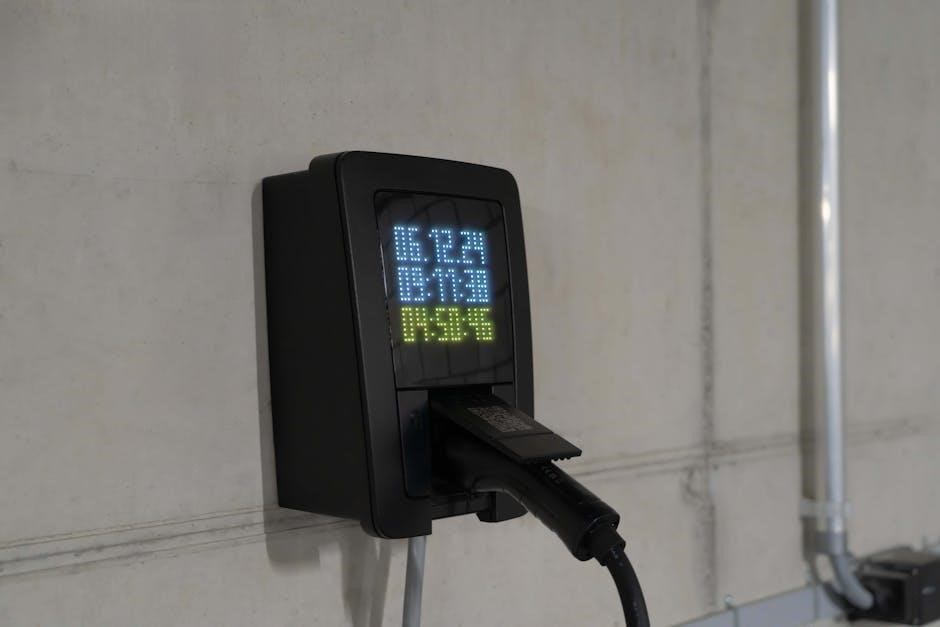
CTEK chargers utilize error codes to indicate charging issues. A flashing red light often signals a problem – consult your specific model’s manual for detailed interpretations. Common issues include reversed polarity (incorrect cable connection), a sulfated battery (requiring desulfation mode), or a battery unable to hold a charge.
If you encounter an error, first, verify the cable connections are secure and correctly polarized. Ensure the battery isn’t damaged or excessively discharged. Attempting the desulfation/recondition mode might revive a sulfated battery. If the problem persists, consult the CTEK support website or contact their customer service for assistance. Never attempt to disassemble or repair the charger yourself, as this voids the warranty and poses a safety risk.
Connecting the Charger Correctly
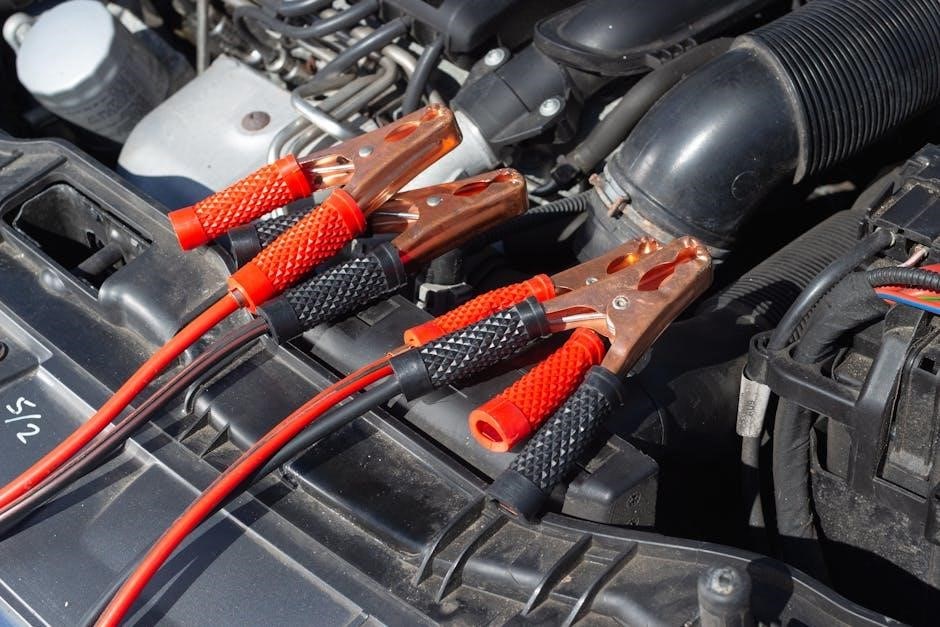
Proper connection is crucial for safe and effective charging. CTEK chargers often include both clamp connectors and eyelet terminals for versatile battery connections. Eyelet terminals, permanently affixed to the battery, offer a more secure and efficient connection, minimizing resistance. When using clamps, ensure a firm grip on the battery terminals, free from corrosion.
Crucially, observe correct polarity: red clamp/terminal to positive (+), and black to negative (-). Reversing polarity can severely damage the charger and the battery. Always connect the charger to the battery before plugging it into a power outlet. Disconnect in reverse order – unplug from the outlet first, then detach the battery clamps or terminals.
Clamp Connections vs. Eyelet Terminals
CTEK chargers frequently ship with both clamp connectors and eyelet terminals, offering flexibility in establishing a battery connection. Clamp connections are ideal for temporary or infrequent charging, providing quick attachment and detachment. However, they can be prone to slippage or corrosion, hindering optimal charging efficiency.
Eyelet terminals, conversely, demand a more permanent installation, directly attaching to the battery posts. This creates a robust, low-resistance connection, maximizing current flow and minimizing voltage drop. While requiring initial effort for installation, eyelet terminals deliver superior performance and reliability, particularly for batteries undergoing regular maintenance or long-term storage. Consider your charging needs when selecting the appropriate connection method.
Polarity: Positive and Negative Terminals
CTEK battery chargers, like all DC charging systems, are polarity-sensitive. Incorrect connection – reversing the positive and negative terminals – can severely damage both the charger and the battery. Always double-check the markings on both the charger leads and the battery itself before establishing a connection.
The positive terminal is typically marked with a “+” symbol and often features a red cable or connector. Conversely, the negative terminal is indicated by a “-” symbol and usually has a black cable or connector. Ensuring correct polarity is paramount for safe and effective charging. CTEK chargers often include reverse polarity protection, but relying on this feature isn’t advisable; prevention is always better than cure.